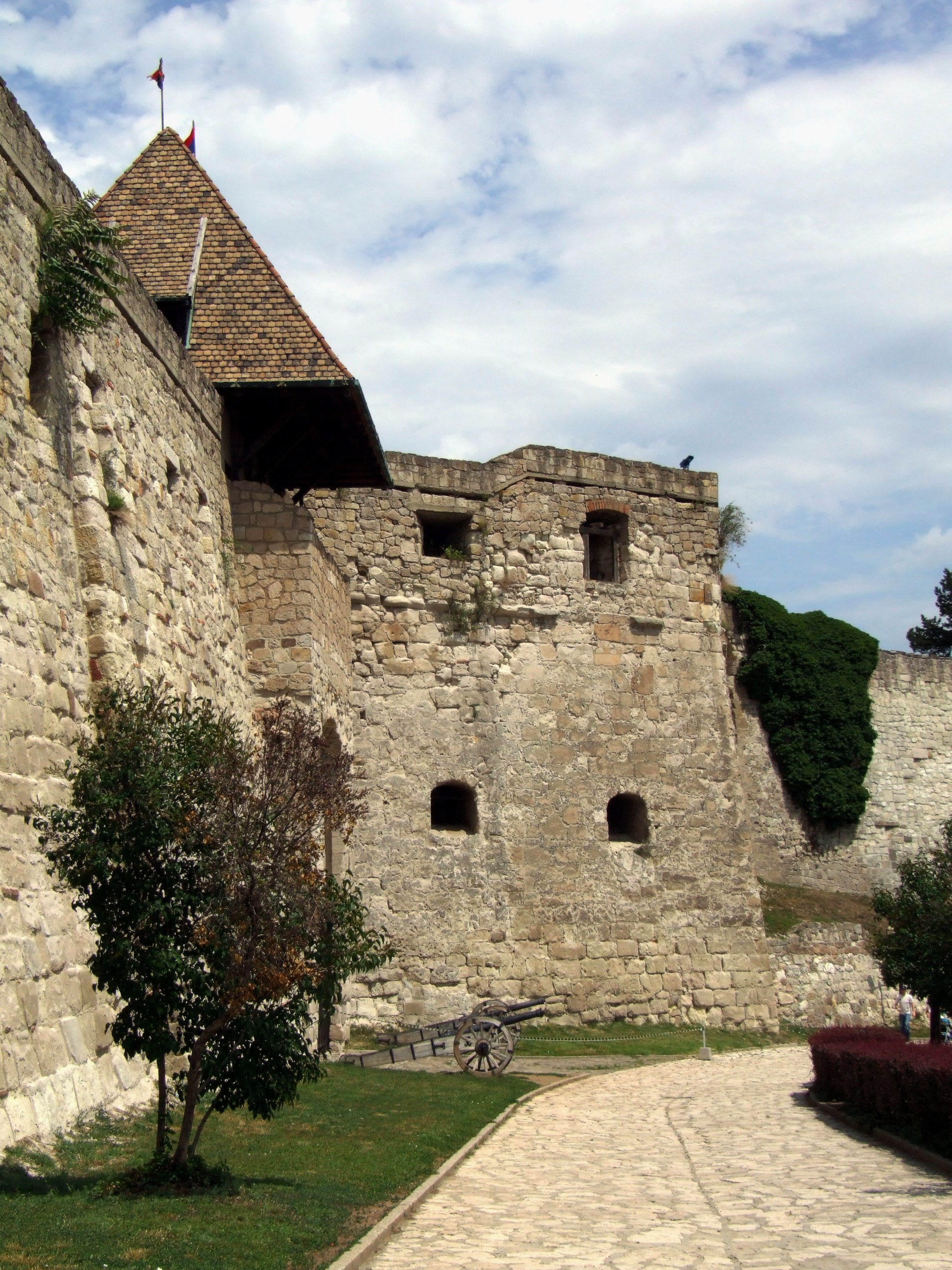
In September 1552, a garrison of roughly 2,000 men and women held the hilltop fortress of Eger against an Ottoman army estimated at 35,000 to 40,000 troops. The siege lasted thirty-nine days and ended with an Ottoman withdrawal. It became the most celebrated military event in Hungarian history, a narrative of determination against overwhelming odds that still resonates in the national consciousness.
Strategic Context: Why Eger Mattered
By the early 1550s, the Ottoman Empire controlled most of central and southern Hungary. The medieval kingdom had been partitioned since the disaster at Mohacs in 1526, with the Habsburgs holding a strip of western territory, the Ottomans occupying the central plains, and a semi-autonomous Transylvania existing under Ottoman suzerainty in the east.
Eger sat at a critical juncture. Located in the hills of northern Hungary between Buda and the Slovak mining towns, the fortress controlled the road network linking Ottoman-held territory to the still-independent north. If Eger fell, the Ottomans could push into Upper Hungary and threaten the mining regions that provided much of the Habsburg treasury's revenue.
The Ottoman campaign of 1552 had already been remarkably successful before reaching Eger. Several fortresses in the region, including Temesvar and Szolnok, had surrendered or fallen quickly. The commander at Szolnok abandoned his post before the siege even began, and the pattern of quick capitulation suggested that Eger would follow the same path. The defenders of Eger were expected to negotiate terms and withdraw.
The Garrison and Its Commander
Captain Istvan Dobo had been appointed to command Eger in 1549. By most accounts, he was a practical military administrator rather than a charismatic leader. His primary contribution was preparation: he spent three years strengthening the castle's walls, stockpiling gunpowder and provisions, and training his garrison in defensive tactics suited to the terrain.
The garrison itself was a mixed force. Professional soldiers made up the core, supplemented by armed civilians from the town of Eger below the castle. The total number of defenders is debated among historians. The most commonly cited figure is around 2,000, though some sources place it lower. What is beyond dispute is the extreme disparity between the defending and attacking forces.
A significant element of the defense narrative involves the women of Eger, who reportedly carried boiling water and hot oil to the walls during assaults. The degree of female participation has been amplified in literary and artistic treatments, particularly in Geza Gardonyi's 1901 novel Eclipse of the Crescent Moon, which became the foundational text of the Eger legend. The historical evidence does support civilian involvement in the defense, though the specifics remain difficult to verify from contemporary sources.
The Course of the Siege
The Ottoman army, commanded by Ahmed Pasha and later reinforced by Ali Pasha, arrived before Eger in mid-September 1552. The attackers established positions around the fortress and began a bombardment that intensified over the following weeks.
Ottoman siege technique of this period followed a well-established pattern: artillery bombardment to breach the walls, followed by infantry assaults through the gaps. At Eger, this approach was complicated by the castle's hilltop position, which limited the angles available for effective cannon fire and forced attacking infantry to advance uphill under defensive fire.
The most critical phase came in early October, when sustained bombardment finally opened breaches in the northern and eastern walls. Ottoman forces launched coordinated assaults through these gaps on multiple occasions. Each assault was repulsed, though at significant cost to the garrison. The defenders used improvised weapons alongside conventional arms, and the close-quarter fighting at the breach points was particularly brutal.
Dobo's leadership during these critical days focused on logistics as much as tactics. He organized the garrison into shifts to maintain round-the-clock vigilance, ensured that wounded defenders were treated and returned to their positions when able, and managed the distribution of diminishing gunpowder supplies to maximize defensive effectiveness. According to the accounts studied by the Hungarian historical archives, Dobo reportedly swore an oath that he would blow up the powder magazine rather than surrender.
The Ottoman Withdrawal
On October 18, 1552, the Ottoman army began withdrawing from Eger. The exact reasons for the withdrawal remain debated among military historians. The approaching autumn weather was one factor: sustained siege operations became increasingly difficult as temperatures dropped and supply lines stretched. The unexpectedly determined resistance had also caused significant Ottoman casualties, and the campaign season was ending with Eger still holding.
Some historians argue that the Ottomans simply concluded that Eger was not worth the additional cost required to take it, particularly since other objectives that season had been achieved. Others point to logistical problems within the Ottoman camp and the difficulty of maintaining a large army in the field as winter approached. The truth likely involves a combination of all these factors.
Whatever the precise reasoning, the withdrawal transformed Eger into a symbol. In a year when fortress after fortress had fallen or surrendered, Eger alone had held. That distinction guaranteed its place in the Hungarian historical memory.
The Legacy and the Castle Today
The 1552 defense became the central narrative of Hungarian resistance to Ottoman conquest. Gardonyi's novel, published nearly 350 years after the event, cemented the story in popular culture and remains required reading in Hungarian schools. The phrase "Eger stars," referring to the women who allegedly poured hot oil on attackers, entered the Hungarian language as an idiom for fierce determination.
The castle itself fell to the Ottomans in 1596, during a later siege when the defending garrison mutinied and surrendered against orders. This less heroic sequel to the 1552 defense receives considerably less attention in popular accounts, though it is equally important for understanding the period.
Visiting the castle today, you can walk the bastions and walls that Dobo's garrison defended. The castle museum contains period weapons, documents related to the siege, and a model of the fortress as it appeared in the sixteenth century. The underground casemates are particularly evocative, giving a physical sense of the confined spaces where defenders sheltered between assaults.
- Dobo Bastion: Named after the garrison commander, this section of the fortification offers views across the Eger valley and the town below. The scale of the defensive position becomes clear from this vantage point.
- Castle Museum: Houses the permanent exhibition on the 1552 siege, including Ottoman weapons recovered from the site and period illustrations of the battle.
- Underground Casemates: The tunnel network beneath the castle is partially accessible to visitors. These passages served as sheltered communication routes and storage during the siege.
- Dobo Square: In the town below the castle, the main square features a statue of Istvan Dobo and serves as the starting point for the walk up to the fortress.
Getting There and Practical Tips
Eger is approximately 130 kilometers northeast of Budapest, reachable by direct train in around two hours. The castle sits on a hill above the town center and is accessible on foot from Dobo Square in about fifteen minutes. Admission covers the museum, bastions, and casemates. Allow at least three hours for a thorough visit.
The town of Eger itself rewards exploration beyond the castle. The Minaret, one of the northernmost surviving Ottoman minarets in Europe, stands near the town center. The Valley of the Beautiful Women, a collection of wine cellars offering tastings of the region's Egri Bikaver red blend, is a short taxi ride from the center. Combining the castle visit with the wine valley makes for a full and worthwhile day trip from Budapest.